Farewell, programming
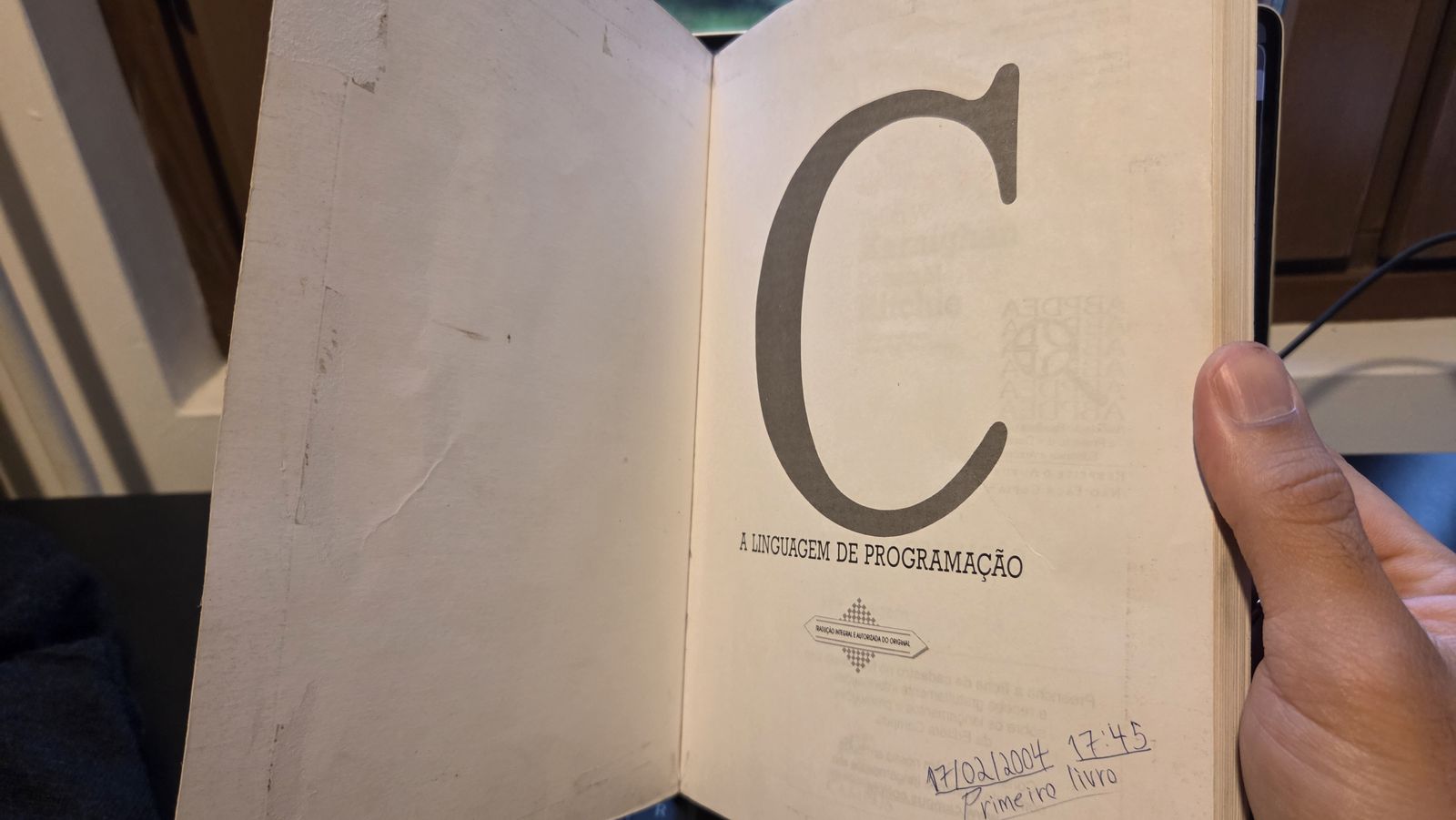
I bought my first programming book in 2004, "The C Programming Language" by K&R. I had been making video games by myself since 2001 using simpler tools such as Multimedia Fusion, and had dabbled with Visual Basic too. But this time I wanted to get serious and do real programming, despite being just a kid.
What dragged me into programming was the promise of building all my ideas. I always liked making pixels move on the screen. I'm not sure why. After my initiation into game development, I moved on to other challenges such as computational fluid dynamics at university, which I enjoyed very much. More pixels moving on the screen, but this time backed by science, and full of meaning. Programming was a craft and a superpower.
Throughout my career as a web and mobile software engineer, I had the privilege of becoming well-known for open source libraries and (as a result) conference talks. Many of you may know me for teaching reactive programming, for example. Saying farewell to programming is by extension saying farewell to reactive programming too.
2026 is very likely the last year I will write code with my own hands, and
might be one of the last years when I still read code. AI has changed
everything. The likelihood of slop is decreasing with every new frontier model
release, and the economic reasons to type code line by line are vanishing
have vanished.
I am not sad about it. I very much enjoy the new tools and the productivity boost. It means I now have an entire team of "myself equivalents" that I can coordinate from my phone on the beach, or with my voice while driving.
But given that this is almost certainly the end of my more than two decades of inputting code into keyboards, I believe this deserves an intentional pause. A minute of silence, you could say. Programming is dead, and I don't want to dismiss all of my journey as merely the inefficient pre-AI struggle.
What exactly has "died"? It would be unfair to say it was merely about "writing code", as if one just had to sit down and type. It would also be incorrect to say what I'm doing today (pull request reviews, product and UX design, planning, coordination with customers and stakeholders, and team building) is just a version of programming. No, it is not.
For me, programming was about living in the technical guts of the computer. Computers could do things for us only if they were programmed. Without programming, computers were dead and pointless. We were the ones who went inside and instilled them with life. There was no other way of giving meaning to a computer or its software.
For most people (also known as "non-techies"), computers were black boxes. And when computers didn't give them what they wanted, we—programmers, developers, engineers, coders—were the ones they turned to. We had a mental model of how things worked (sometimes imperfect, but sufficient for the job) and the ability to correctly express in a computer language what needed to change. All of this used to be, in my mentors' words, "highly non-trivial".
Sitting in front of a computer thus meant marvelling at humanity's masterpiece. Complex software (such as operating systems and massively multiplayer online games) required billions of lines of code planned by, written by, and tested by thousands of people. These were the Egyptian pyramids of software.
But sitting in front of a computer today means marvelling at what AI has made, the kinds of games it has decompiled, the research breakthroughs it is making, the productivity enabled by concurrent agents, and much more.
When you look back at it, the programming profession lasted roughly 50 years as an industry, depending on how you count when it started and when it ended. Other professions, such as farmers and lawyers, have been around for thousands of years. Dentists for 300+ years. Bus drivers some 150+ years. Software engineering will go down in history as a transitory profession, not unlike the occupation of a computer.
While I was still into it, I very much enjoyed programming. It was a form of puzzle-solving, but it was also about organization, communication, planning, creativity, and exploration.
But I will not miss it. I won't miss the endless arguments about little syntactic annoyances, troubleshooting frustrating bugs that stalled progress for hours or days, and all that typing that strained my wrists. Nope.
I got into programming because I wanted to make software come alive and build useful services for customers, friends, and family. I'm doing all of that now far more prolifically than before, with AI. Maybe some people enjoy the typing and the microscopic troubleshooting as a hobby or something like that. I don't. I want to make software.
Farewell, programming.
If you found this useful, you can support my writing on Patreon.